
How Tisha Thompson Turned Vision into LYS Beauty
Updated: 2 days ago
COVER STORY
Ahead of LYS Beauty's five-year anniversary, founder Tisha Thompson talks to Black Beauty Founders about the military childhood that taught her to fit in fast, the Sephora pitch that launched her clean beauty brand, and the strategy behind it.
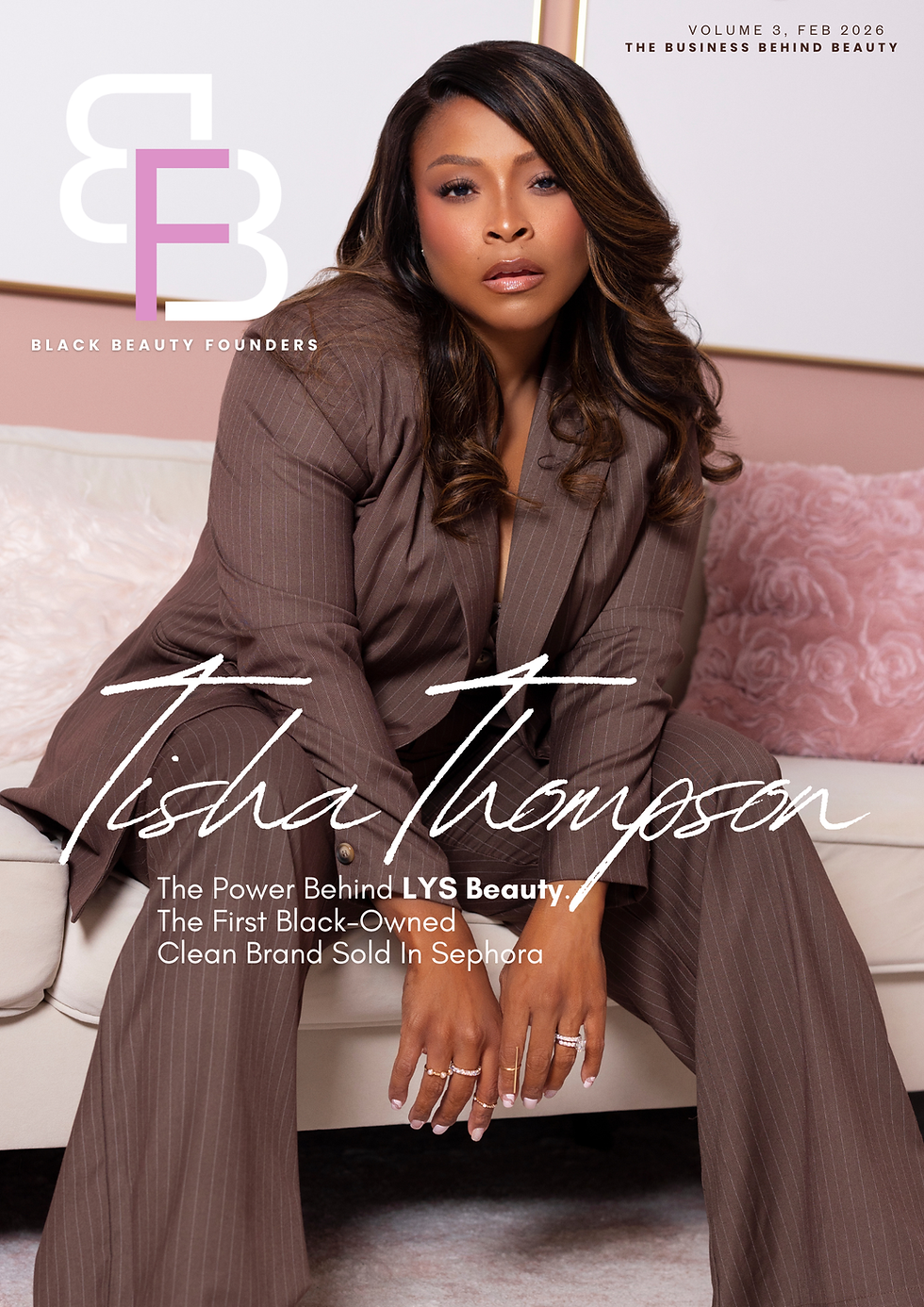
Tisha Thompson laughs the way founders do when they are telling the truth but still trying to keep it cute.
The kids have been home too long. The weather is doing the absolute most. The group chat energy is real. Somewhere between a kettle, a pantry, and a cold snap that makes no sense in the South, the woman behind LYS Beauty is exactly who you think she is: warm, funny, sharp, and operating with the kind of clarity that only comes from living a lot of life before you ever launch a brand.
Black Beauty Founders had the opportunity to sit down with Thompson ahead of LYS Beauty’s five-year anniversary, a milestone that lands on Valentine’s Day, February 14. The date is perfect on paper, but the real story is how she got here. The short version is beauty, business, and timing. The real version is grit, grief, and a very bold email.
Before LYS, there was the girl who moved every few years as a military child, learning how to fit in fast. Hair and makeup became her bridge. It was how she broke the ice. It was how she found community. “It was always easy to bond with girls at my new school around hair or makeup,” she told us, remembering homecomings, bleachers, French braids, and the kind of teen-girl ritual that quietly becomes a skill set.
She wanted to be a makeup artist. Her parents wanted stability. So she did what smart girls do when the dream is real but the world is practical. She studied business and finance, worked at MAC on weekends, then clocked in as a staff accountant during the week, handling payroll, accounts receivable, and the serious stuff. It was not glamorous, but it was a blueprint.

Then came the pivot that changed everything. She landed at a beauty company doing accounting and kept pushing to get closer to product and marketing. “I had FOMO every time I went to work,” she said, remembering how badly she wanted to be on the other side of the table. When a marketing coordinator role opened, she took the shot, even though it meant starting over. “I don’t care. I just want to be on the team. I will do whatever it takes.”
The bet paid off. Over 15 years, she rose through the ranks, eventually running one of the company’s brands. When she stepped in, the brand was doing about $6 million in sales. She scaled it to $40 million. She calls it her boot camp, the kind of training that teaches you the map before you ever need to draw one.
Still, launching her own brand felt impossible. Not because she lacked talent, but because she had seen the industry up close. She had been in the rooms, at the events, in the spaces where founders who look like her were rare unless they were celebrity-backed. “It was hard to see the vision,” she said. “That’s why I always really advocate for representation because seeing it matters.”
Then 2019 happened.
She lost her father, and the grief came with a reset she still speaks about with certainty. “Life is very short and it is very fragile,” she said. “If you have an inkling of an idea, a passion or a vision to do something, you damn well better do it.”
He left her a little money. Not enough to play forever, but enough to plant a seed. She decided to bet on herself.
The timing could not have been worse. She made the decision, started winding things down, and then 2020 hit. The world shut down, supply chains stalled, and nothing about launching a beauty brand made sense. She was already too far down the path to turn around. So she did what founders do when the plan breaks. She built anyway.
During the same year everyone was posting black squares and brands were promising change, Thompson made a move that still sounds unreal even when she says it out loud. She pitched Sephora with no finished product, no website, and no track record. “I didn’t have nothing,” she told us. “I had a PowerPoint presentation… with some renderings.”
She found executives on LinkedIn, guessed their emails, and sent her deck to about a dozen people with a heartfelt letter that basically said: change requires action, and she was ready to be part of it. Ten or eleven days later, the email came back. They wanted a meeting.

Then the sentence that changed her life. “We’re betting on you,” she was told.
The brand they bet on was LYS, short for Love Your Self. It was not a trendy tagline for her, it was a correction. She came up in a beauty era that often felt like fixing what was wrong with you, hiding flaws, chasing one narrow standard. She wanted to flip the narrative and make beauty about confidence, creativity, and self-expression. “If people leave an ounce more confident than they came into dealing with us, then we’ve solved the problem,” she said. “I don’t care if we sell them a single product.”
Five years in, the vision has not changed. The megaphone has. She still sounds amazed when she talks about it. “It’s still mind blowing to me,” she said, describing the moment she realized LYS was reaching far beyond her original community.
For her, the TikTok breakthrough was not a dashboard report. It was her son. He came home from school and told her one of his friends had seen her online. “Mom, I don’t know if you know, but you’re TikTok famous,” he said, asking if he could bring a bronzer stick to school the next day. Thompson said she almost fell out of her seat. For a 13-year-old to label his mom cool is rare. For him to know the product by name was proof the brand had broken through.
LYS entered TikTok Shop in late 2022, with the real acceleration coming in 2023. She calls herself an IG girl, but TikTok forced a strategic shift. What used to be a Meta-heavy approach became a balanced play. “We’re probably 60% TikTok, 40% Meta now,” she told us. It was not just about reach, it was about modern momentum.
Momentum matters even more when you are also in retail, and LYS is very much in retail. Thompson does not treat Sephora and DTC like rivals. She treats them like two best friends who both need attention. “This isn’t a competition between two channels,” she said. “This is really a harmonious relationship.”
She explained it simply: DTC lets you control the story. Retail lets customers touch, shade match, and fall in love in person, especially for complexion products. TikTok creates cool factor and demand. Sephora becomes the stage where that demand converts. “Our boom on TikTok has really elevated our strength at Sephora,” she said. In a store packed with options, being the brand someone walks in asking for changes everything.
When the conversation turned to Black founders, her tone got both tender and firm. She talks about credibility, about creating for us without making us an afterthought, about the difference between being offered solutions and being understood. Then she got to the point: the industry still does not fund Black founders the way it funds everyone else.

“Capital still remains a challenge,” she said. “You can’t solve some of those things without resources.” She made a nuanced point founders will recognize instantly: money is not the strategy, but money unlocks the talent and execution strategy requires. “Experience trumps capital,” she said, explaining how knowing the map prevents expensive mistakes. Still, without funding, many founders end up forced to outsource expertise they cannot afford to hire, which slows everything down.
When we asked what changed after she secured investment, she listed exactly what the money bought her: inventory confidence, team expansion, and the ability to show up in real life. LYS invested in inventory so the brand could stop living in constant sell-outs and start planning six months ahead. She filled key roles and brought photo and video in-house to move faster. She leaned into experiential marketing, showing up big at Essence, launching a 10-city HBCU tour, and investing in in-market activation so customers could see the brand everywhere, not just on a screen.
She is also realistic about visibility. Founder-led storytelling is the rule now, and she admits she did not want to play that game at first. “I’m just a behind the scenes girl,” she said. She knows what comes with being visible: opinions, trolls, noise. She also knows what comes with not being visible: stalled growth.
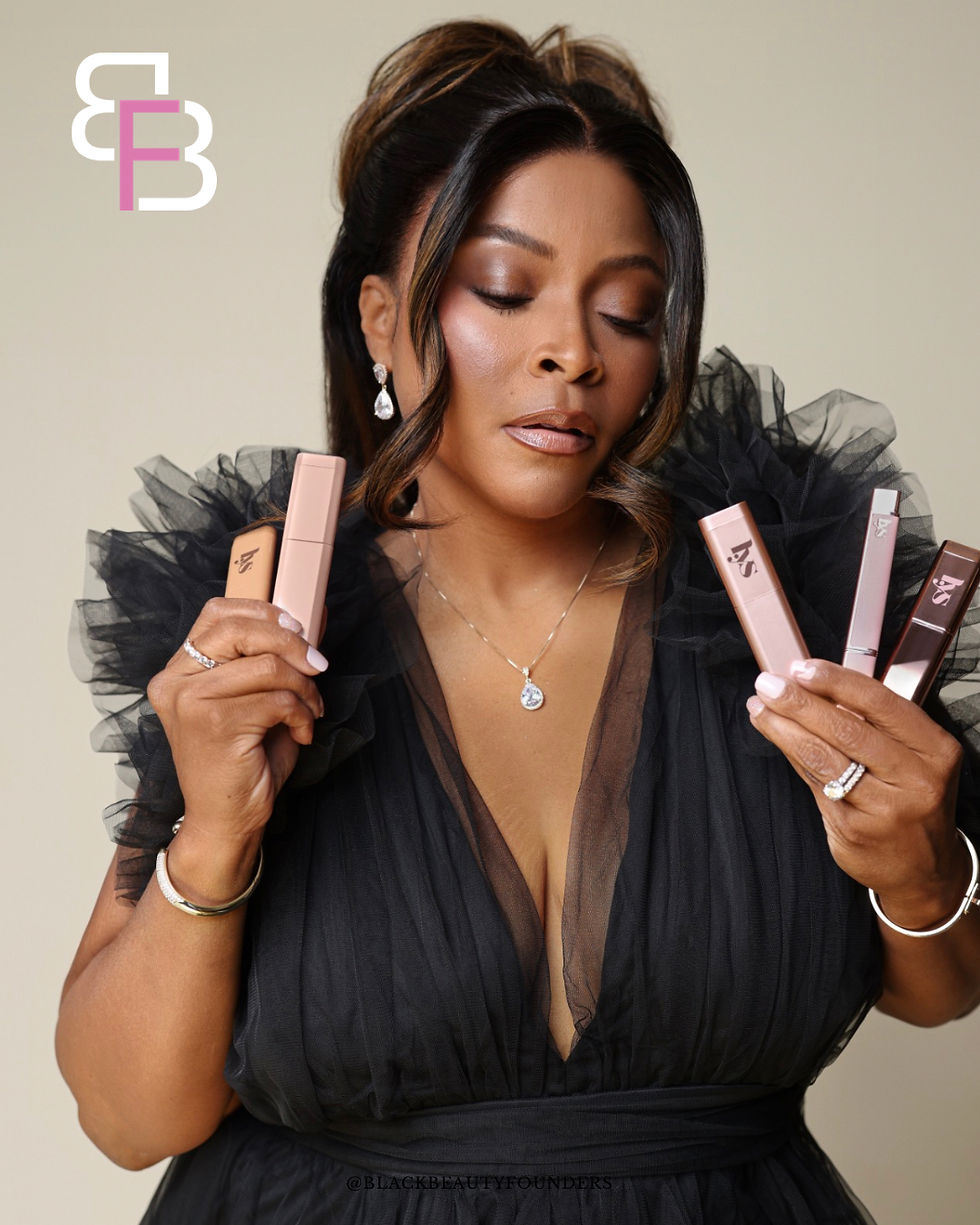
So she made a decision, and she is executing it like an operator. Her team built a filming schedule. She started batching content, learning her rhythm, and choosing what to share and what to protect. “It’s extremely intentional,” she said, describing it as a year-and-a-half process. Now she is leaning into visibility not for fame, but for legacy, credibility, and scale.
As a mother, she speaks the same way she leads, with boundaries and humor. She told us about protecting her sons from environments that move too fast, and how parenting today requires discernment, strategy, and the willingness to make hard calls. The founder brain never turns off. She is building a brand, raising kids, protecting peace, and still finding ways to stop and recognize what she has done.

Coming up on five years, she says the recaps hit her in the chest. “Sometimes I forget… I’m doing things that people are dreaming that they will be able to do one day,” she said. She talked about how easy it is to bulldoze to the next goal without giving yourself flowers, and how seeing old footage of her kids helping pack boxes reminded her how fast this has all moved.

For Black Beauty Founders, Thompson represents a specific kind of power: the founder who built on experience, moved with intention, and refuses to let the industry’s limits dictate her ceiling. LYS is not just a brand name. It is her thesis. Love yourself, but also bet on yourself. Do the email. Send the deck. Build the team. Protect your peace. Show up anyway.
Because in her world, the difference between a dream and a business is rarely talent. It is the decision to go.
Get The Insider Edit
The cover stories, launches and founder news shaping Black beauty, in your inbox.


Comments